

On 14 January 2026, the White House issued a proclamation that most business media buried below the fold. It directs negotiations on processed critical minerals and requires a government progress report within 180 days. Further import measures remain possible if no effective agreement is reached. A negotiating timetable, not an automatic cobalt-certification cutoff. July 2026.
I read it sitting in a café in Leipzig, between calls with founders in Singapore and Dubai. And I thought: this is the moment the fortress stops being a metaphor.
For years, commentators have been declaring American decline. The $38 trillion debt. The political fractures. The dollar losing ground in global reserves. From a distance, it does look like the final credits rolling on an empire.
But what if we’re not watching a funeral?
What if we’re watching something closer to what biologists call ecdysis (and yes, I had to google that myself), that moment when a creature sheds its old rigid shell to reveal a larger, more capable version underneath?
The United States might not be collapsing. It could be restructuring. And the architecture it’s building will determine which companies can operate at the frontier of global markets, and which get locked outside the walls.
This matters to anyone building across borders. Because the rules that governed where to incorporate, which cloud provider to use, where to source components, and which payment rails to build on are all quietly being rewritten. And most operators are still optimizing for a world that’s already disappearing.
What’s Actually Being Built
To understand Empire 4.0, you need to see how it differs from what came before.
America’s first empire was dirt. From the 1800s to the 1890s, it was about manifest destiny. If you could walk on it, plow it, and build a fence around it, it was yours. Land equaled power.
The second empire was access. After 1898, America didn’t need to annex the Philippines or Puerto Rico as states. It needed ports, trade routes, and a blue-water navy. Access equaled power.
The third empire was standards. After 1945, America didn’t want to occupy your land. It wanted to run your software. The dollar as global reserve currency. SWIFT for payments. NATO for security. IEEE and ISO for technical standards. American rules became the global operating system. Standards equaled power.
That third empire is what most people still think they’re operating in. But it’s been dying for a decade, and 2025 marked the year Washington stopped pretending otherwise.
Empire 4.0 is about essentiality. Not being everywhere. Being indispensable to specific things that matter. You want to run cutting-edge AI models? You need American chips, American cloud infrastructure, American-controlled software. You want access to critical minerals for batteries and electronics? You play by fortress rules or you’re excluded. You want premium market access for your products? You prove your supply chain alignment or pay the tariff.
The math has shifted. In Empire 3.0, everyone used American standards because they were universal. In Empire 4.0, you use the American stack because there’s no functional alternative for what you’re trying to build.
The difference matters. Standards create influence through adoption. Essentiality creates leverage through dependency.
The Physical Fortress
Start with the most visible: tariff walls.
Throughout 2025, the US shifted to a 10 to 20 percent baseline tax on nearly all imports. The logic is simple. If a factory in Ohio costs $100 to run and a factory in an adversarial nation costs $85, traditional economics says go overseas. But at a 20 percent tariff, the overseas product costs $102. Suddenly reshoring makes sense.
Customs duties generated roughly $264 billion in federal revenue in calendar year 2025. That becomes a war chest, not a guaranteed annual stream.


Then there’s the critical minerals strategy. The January proclamation directs the Commerce Department and US Trade Representative to negotiate supply-chain agreements for processed critical minerals. It leaves further import measures possible if those negotiations fail or the agreements prove ineffective.
I’ve helped restructure company supply chains three times in five years now. Not because of performance. Because of sanctions risk. Once after Crimea, once after COVID exposed fragility, once after Ukraine. Each time, the “optimal” supply chain changed based on which political risks mattered most. Finance teams hate this work. But it’s the new reality.
The fortress isn’t just about keeping things out. It’s about controlling what matters. Venezuela’s regime change on 3 January 2026 wasn’t primarily about democracy. It was about the world’s largest oil reserves and significant deposits of coltan and gold. Greenland’s rare earth deposits explain why the rhetoric about acquisition keeps returning with sharper edges.
Secondary sanctions complete the picture. If you want the newest chips from Intel, in which the US government now holds a 10 percent equity stake, or if you want access to frontier AI models that run hospitals, power grids, and increasingly military systems, you have a choice. Trade in dollars and align with the fortress, or lose access.
The US is making it nearly impossible for nations to de-dollarize without also de-modernizing. That’s the leverage.
The Ghost Fortress
The physical walls matter. But the ghost fortress matters more.
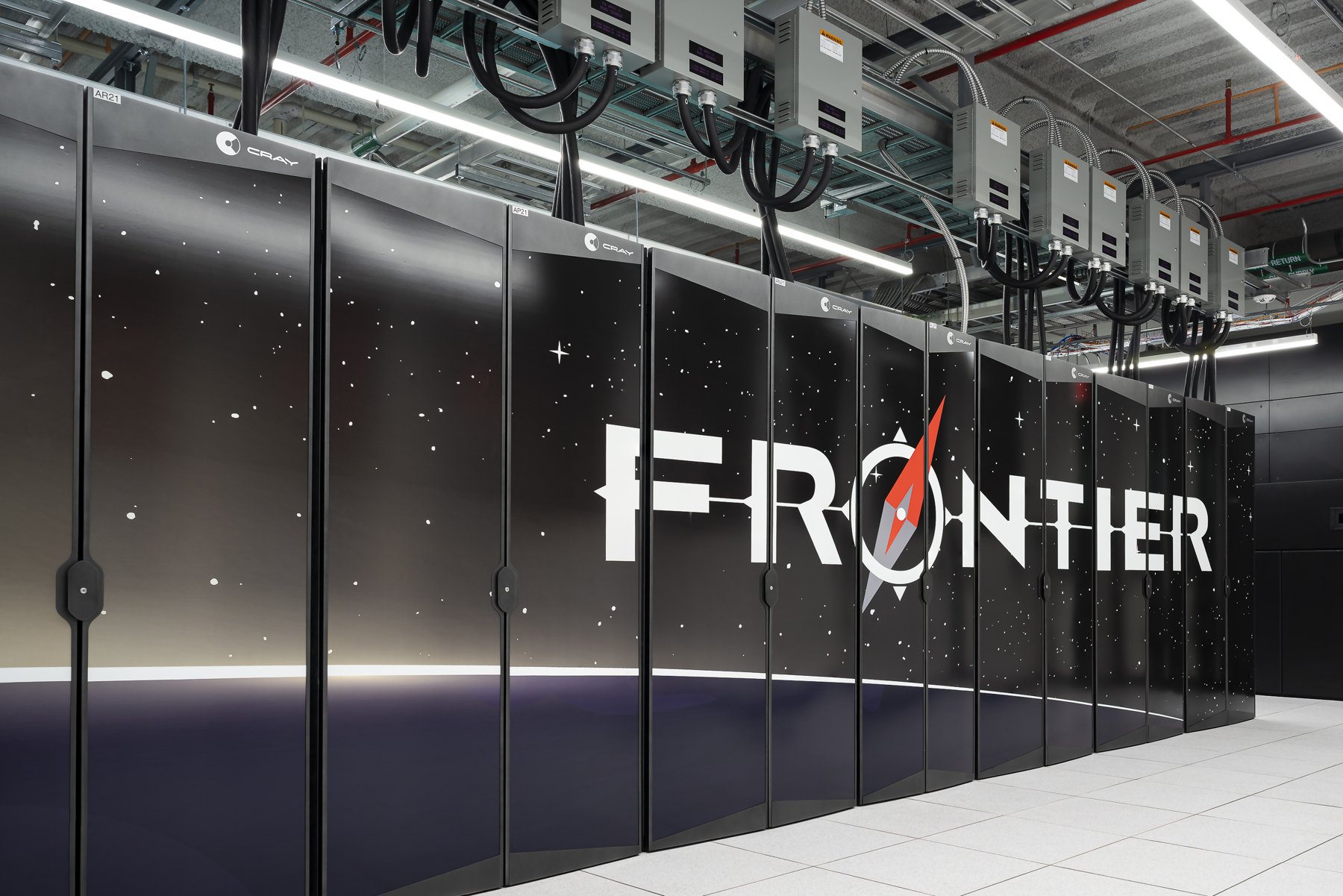
There’s a layered architecture to AI infrastructure that creates dependencies at every level. At the bottom, specialized chips. Then data centers and fiber optics. Then the models themselves, the actual AI brains. Then the applications you use to run your hospital, bank, or phone.
Each layer is a lock.
.jpg)
When the White House released “Winning the AI Race: America’s AI Action Plan” in July 2025, accompanied by executive orders designed to export the American AI stack, they essentially announced a blueprint for dependency.
The strategy is elegant. The US is no longer selling software. It’s selling sovereign AI packages. Want to modernize your economy? Here’s a pre-built American stack. It’s fast, efficient, and brilliant. But there’s a catch. If your country’s government records, tax systems, and power grid run on American-controlled cloud infrastructure from Amazon, Google, or Microsoft, do you still have full sovereignty? Or does the US have a kill switch?
This is vendor lock-in at nation-state scale.
I’ve watched companies spend 18 months building on-premise infrastructure specifically to avoid AWS dependency. Then they realized they needed AWS’s managed services for AI capabilities anyway. The sovereignty they paid for evaporated when the capability gap became operational necessity.
For commercial operators, the pattern is similar. Frontier AI models from OpenAI, Anthropic, and Google are 18 to 24 months ahead of alternatives. If your product requires those capabilities, you’re choosing the American stack whether you articulate it that way or not.
The Department of Energy recently selected TVA and Holtec for up to $800 million in federal cost-shared funding for early small modular nuclear reactor projects. Dedicated nuclear generation could help power AI infrastructure and reduce some exposure to grid constraints. It does not eliminate permitting, construction, operating, or energy-supply risks.
Geography is starting to matter less than energy sovereignty.
The High Ground
Then there’s space.
When the Romans looked at the Mediterranean, they didn’t see a body of water. They saw a highway. They called it Mare Nostrum, “our sea.” To own the Mediterranean was to own the heart of the world.
The United States is looking at the space between Earth and the Moon and saying the same thing.
SpaceX made 134 orbital launches in 2024. In 2025, approximately 165 orbital launches. Roughly one every two days. That’s about 85 percent of all American orbital launches, and more than the rest of the world combined.
This isn’t about having better rockets. It’s about volume that creates strategic dominance. If you can launch at lower cost and far more often than your adversary, you gain leverage over what happens in orbit.
The Golden Dome initiative, originally announced as an “Iron Dome for America,” aims to deploy hundreds of specialized satellites with sensors and interceptors. The goal is to kill missiles in the boost phase, before they even leave the atmosphere. If the US can neutralize nuclear threats from orbit, the fundamental math of global power changes. Deterrence shifts from mutually assured destruction to assured survival for one side.
Artemis 2, targeted at the time of writing for no earlier than February 2026, will send humans around the Moon for the first time in over half a century. The Outer Space Treaty prohibits national appropriation of the Moon, including through use or occupation. A planned sustained presence near the lunar south pole, where water ice exists, could give the US influence over practical operating rules. Being first would create strategic leverage, not territorial ownership.

.jpg)
The cislunar market is projected at $19 billion between now and 2030. If you want to mine the Moon for helium-3 or set up a propellant depot in the 2030s, you’ll be doing it on an American-regulated highway.
Why Challengers Hit the Ceiling
The obvious question is whether anyone can challenge this architecture. Specifically, China.
I’ve heard the Ray Dalio thesis many times, usually from investors who’ve made significant China bets. The pattern he describes is real: historically, rising powers achieve industrial dominance, accumulate gold or reserves, and eventually displace the incumbent’s currency. The Netherlands did it to Spain. Britain did it to the Netherlands. America did it to Britain.
But that pattern worked in a gold-standard world. Modern reserve currency status requires something different.
For the Chinese renminbi to truly challenge the dollar, China would need an independent central bank. It doesn’t have one. Free capital flows. It restricts them. Legal protection for foreign capital from confiscation. Its Foreign Investment Law provides protection against expropriation and requires compensation, though confidence in the institutional safeguards remains a separate question. An open consumer market. Doesn’t work with their ideology.
The Xi administration is committed to export-led growth and state control in ways that make the necessary reforms politically impossible.
The first time I went to China, I spent a month there, back in 2005. I watched it transform for the Olympics. And now we’ve watched the “China opening” thesis collapse over eight years. In 2018, many sophisticated operators still believed gradual market liberalization was coming. By 2026, that thesis is dead. The trajectory reversed. Tech crackdowns. Capital controls tightening. State priorities overriding consumer interests. Covid did its part.
The result is that China’s dollar-denominated GDP growth is already plateauing, following exactly the pattern Japan hit in the 1990s and Europe hit in the 2010s. Export dominance doesn’t automatically translate into reserve currency status without structural reforms the current leadership won’t make.
This doesn’t mean China is irrelevant. It means China is constrained in specific ways that matter for operators deciding which system to align with.
The new BRICS+ counterpart of Swift (Brics Pay) might change parts of the equation, or maybe not. But very likely not fully.
The Operator’s Dilemma
Here’s what I tell founders who ask me about this.
You cannot hedge this.
The conventional wisdom says diversify. Build a dual structure. US entity on AWS serving Western markets, separate entity on Alibaba Cloud serving Chinese markets. Maximum addressable market, hedged geopolitical risk.
A friend of mine advised three SaaS companies on this exact decision in the last year. The ones that tried dual structure burned 30 percent more capital for 20 percent more revenue. Separate teams, separate codebases, no data sharing, compliance complexity, trust issues on both sides. It rarely works unless you’re already large.
Below $50 million in revenue, you can’t afford the complexity. Pick the American fortress or BRICS+ and dominate that segment. Above $100 million, dual structure becomes viable with dedicated teams and managed complexity, but even then... Between $50 and $100 million is the danger zone: large enough that a single market feels limiting, not large enough to execute dual structure well.
The clear-choice operators I’ve watched succeed picked one market cluster and dominated it, rather than spreading thin trying to serve both.
Supply chains work similarly. As critical-minerals rules evolve, sourcing decisions may face new market-access constraints. The January proclamation does not establish a universal cobalt-certification requirement or the specific certification premiums and tariff rates that such a binary model would imply.
The math varies by business, but the two-sided choice doesn’t.
Technology sovereignty sounds appealing until you face the capability gap. Open-source models exist. Regional alternatives are being built. But frontier AI is 18 to 24 months ahead, and for companies serving enterprise customers who require cutting-edge capability, that gap is a competitive death sentence. Sovereignty becomes a luxury you can afford only if your customers don’t require what you can’t provide without the American stack.
Financial architecture is more nuanced. You still need dollars for US market operations. But the weaponization of dollar-based systems, freezing Afghan reserves in 2021, Russian reserves in 2022, means the risk is real. The smart operators I know aren’t abandoning dollars. They’re building hybrid structures: dollars for operations, diversification for resilience. Not either/or, but conscious allocation across systems.
We might see a point where you can only do business with or in the US; when you’re perfectly locked into their technology.
The positioning framework is this: Don’t try to predict which system wins. Position for multiple scenarios with different risk/return profiles.
Fortress alignment means premium markets, access to frontier capabilities, and a 20 to 30 percent cost premium. BRICS+ alternatives mean access to faster-growing markets, lower costs, and a technology ceiling. A hedged dual structure means an expensive but maximum addressable market, viable only at scale.
Your company’s structure determines which option you can execute.
Fall, Rebirth, or Transformation
The honest answer is that nobody knows how this resolves.
The case for fall is real. Net interest payments on federal debt consumed roughly 19 percent of federal revenue in fiscal year 2025. The coalition that made Empire 3.0 powerful, Europe and Japan as major economic partners, represents a shrinking share of global output, while the US is alienating the EU. Plus, policy unpredictability destroys the trust that made the dollar the reserve currency of choice.
The case for rebirth is also real. Every previous challenger, Japan in the 1980s, Europe in the 2000s, now China, has hit a plateau rather than displacing American dominance. The US still controls the AI stack, space infrastructure, and financial plumbing. No credible alternative exists.
The most likely outcome is transformation. Empire 3.0 is dead. Empire 4.0 is being born. Neither complete collapse nor clean continuation, but a structural shift in how American power operates. If it stays open or becomes a fortress, only the future can tell. The EU is certainly preparing to not be left behind. And China still has enough power to potentially overcome their plateau.
For operators, the implication is the same regardless of which scenario unfolds: you need positions in multiple systems, not a bet on single outcomes.
What I’ve learned watching this unfold while having companies incorporated in Germany, the UAE, Singapore, and the US is that commentators debate decline while economists argue reserve currency timelines, while politicians posture about alliances. Operators have a different advantage. We don’t need to predict outcomes. We need to position ourselves for scenarios.
What you can control: supply chain resilience across systems. Market access through tiered strategies. Technology stack decisions are made consciously rather than by default. Financial architecture that acknowledges both dollar necessity and dollar risk.
The fortress may succeed in creating a new form of essentiality-based dominance. Or multipolar fragmentation may accelerate and create a messier world with competing systems and higher transaction costs everywhere.
The world may very well decide to come together outside of the fortress to build a newly connected world that’s completely fine without access to the American fortress.
Either way, operators who understand the architecture being built, who see the fortress rising while others argue about whether it should exist, will be positioned to thrive on whichever side of the wall they choose.
Because in the end, power doesn’t care about your political preferences. It cares about essentiality. And if you understand what’s becoming essential, you understand where the opportunities are.